- Published on
The Muse Use
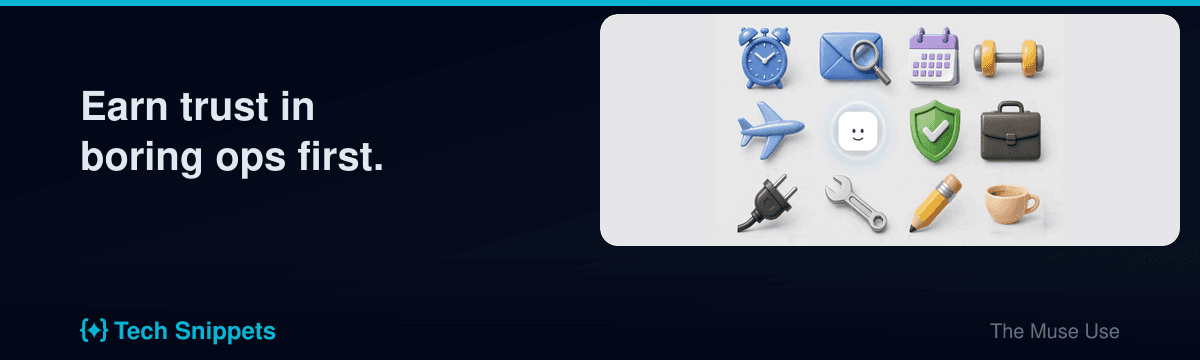
The AI Corner published a sharp piece this week: a "Meta Muse operating manual" with a 25-prompt library, a money-recovery week, and a connector play. Good starter kit.
But the real operating manual is the one you write after living with a personal agent for months. This is mine — ten use cases that survived contact with a busy household.
1. The morning brief. 6 AM, every day: every calendar, every reminder, top headlines, weather on top. Highest-ROI prompt I own.
2. The nightly email scan. It watches my inbox for anything calendar-relevant or deadline-sensitive — sign-ups, permission slips, order windows — and flags them before they expire. A registration window I nearly missed two years running? Handled.
3. Calendar ops. Add, move, delete across multiple calendars; share with family; flag overlaps at creation. Once I carried two recurring events in the same slot for weeks before noticing. Never again.
4. The auto-booker. It drives a real browser and books my gym classes the minute the booking window opens. Popular slots sell out fast; I haven't touched a booking page in weeks.
5. Travel logistics. A family vacation planned end to end — flights, stays, tickets, rental car. And an international trip where it price-checked third-party booking sites against the airline direct and gave me the honest read: book direct if the price is close.
6. Insurance claims. After a minor car accident, it tracked the claim, kept the adjusters and paperwork straight, and did the deductible math on the cheapest path out.
7. The pre-meeting brief. Before a call with a financial advisor about an investment product, it researched the pitch, reviewed the illustration, and handed me five pointed questions. I walked in armed.
8. It builds its own connectors. When no integration existed, the agent built one — from API docs and CLIs. The connector platform is the product.
9. The late-night troubleshooter. One evening: a photo of a stuck appliance. Stepwise diagnostics. When the first fix failed twice, it stopped repeating steps and asked the one question that discriminated between a mechanical problem and an electronics problem. That's the real test — not knowing the answer, but changing strategy when wrong.
10. It writes like me. Emails and messages: direct, familiar, minimal. After a few rounds of edits, the style stuck as a standing rule, not a one-off.
The pattern across all ten: the agent earns trust in boring ops first — briefs, bookings, scans — then graduates to money and judgment calls. Start with the morning brief. The rest compounds.